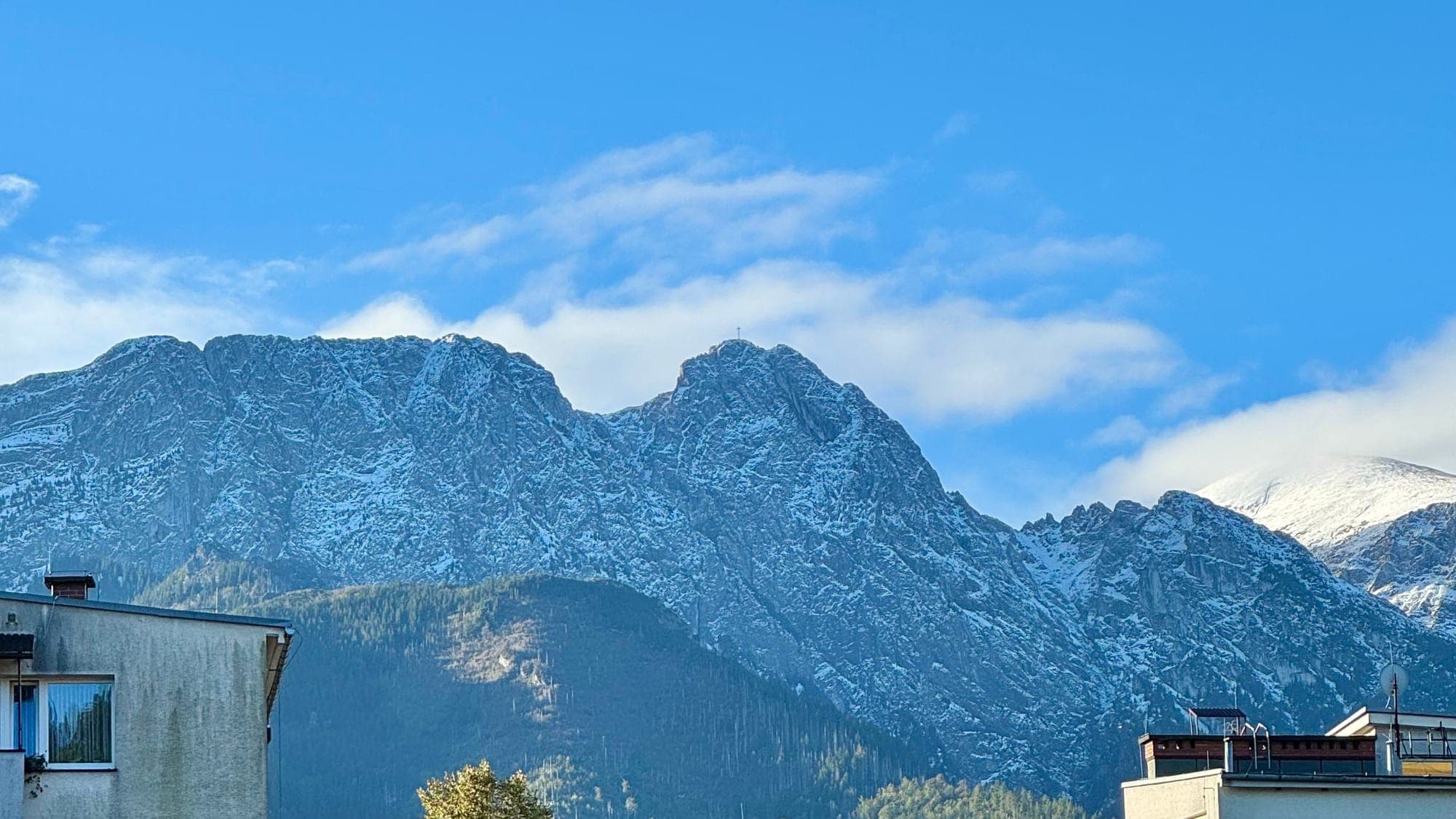
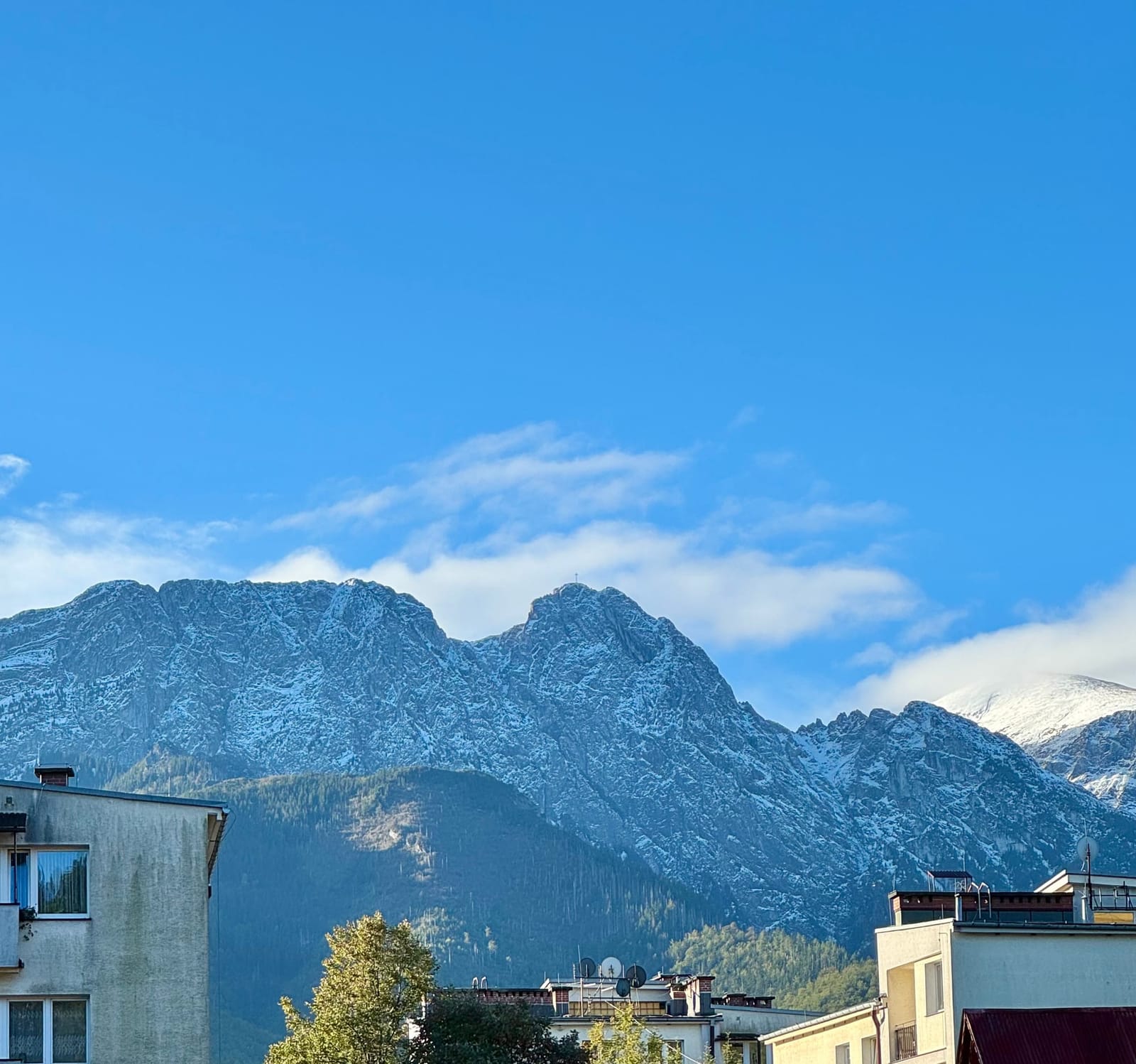
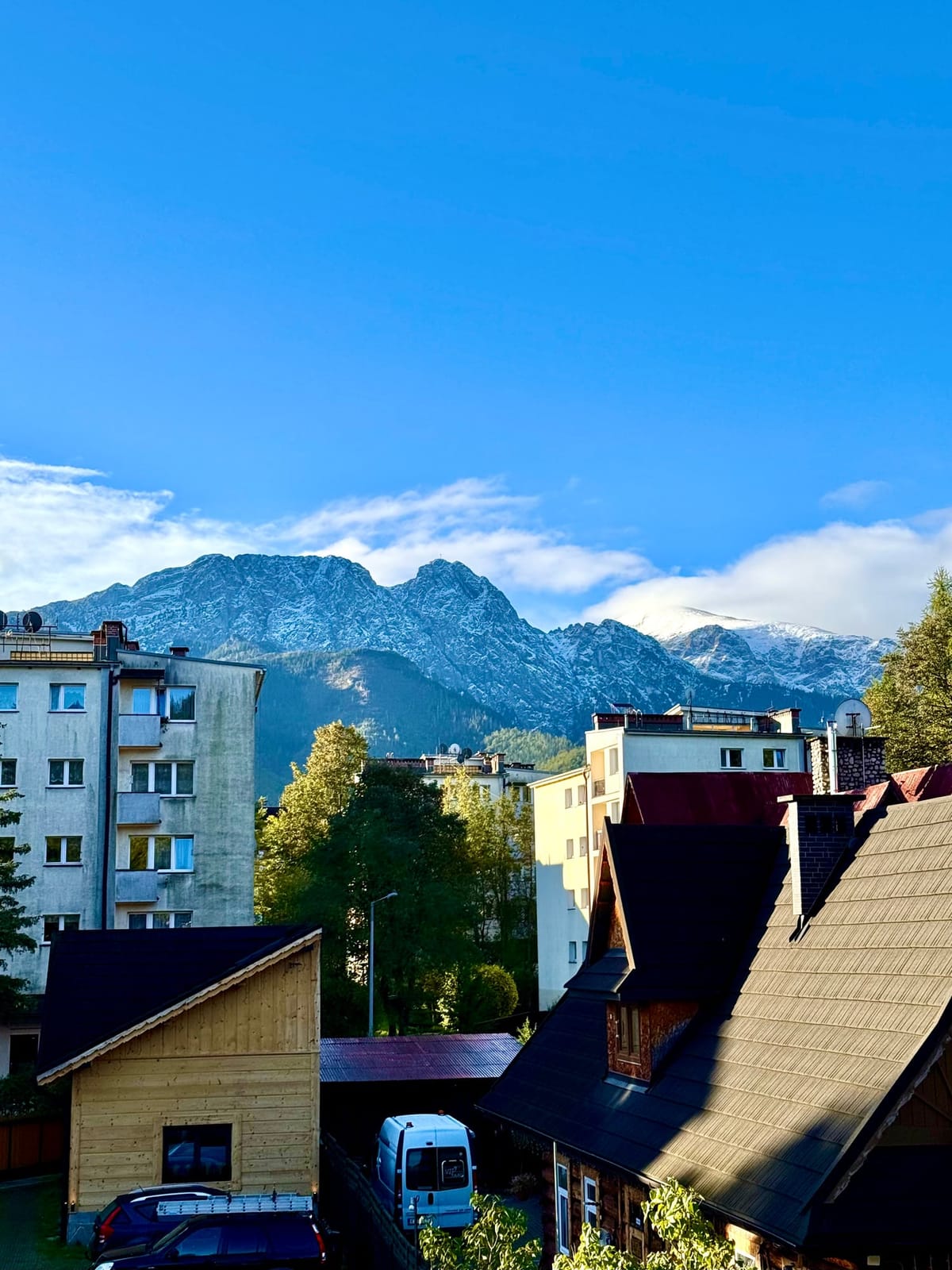
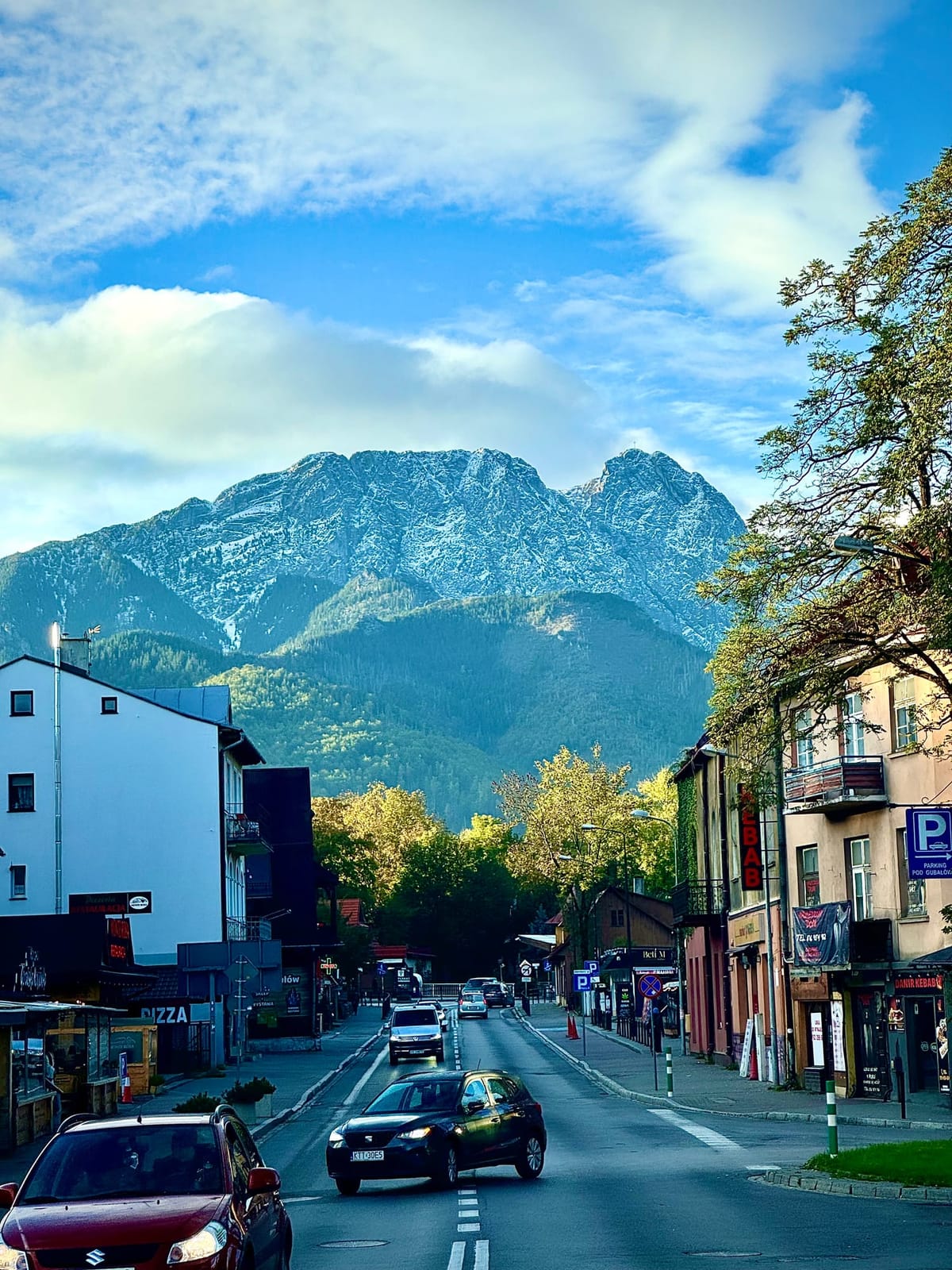
The best views and the oldest part of town, without rushing.
Morning: the funicular up Gubałówka (the ride takes about 3.5 minutes) and a walk along the ridge towards Butorowy Wierch.
Take the chairlift down from Butorowy Wierch — the finest views are on the way down.
Afternoon: Kościeliska Street, the Old Church, Pęksowy Brzyzek Cemetery and Villa Koliba.
Evening: Krupówki and dinner in the centre.
02
Weekend (2–3 days)
The town, one valley and one high-altitude goal — with room to spare for the weather.
Day 1: the “Zakopane in one day” plan.
Day 2: the Kościeliska Valley or the Strążyska Valley with Sarnia Skała — set off early, before the crowds.
Day 3: Kasprowy Wierch (buy tickets online) or, if it rains, the Tatra Museum and the thermal baths.
03
With kids and for rainy days
A programme that is easy to move indoors.
TPN (Tatra National Park) Nature Education Centre — free entry with an online booking (closed on Sundays).
Kornel Makuszyński Museum — Koziołek Matołek, the famous children’s-book goat, and a play area for kids.
In the afternoon, the thermal baths — or the rope park if it clears up.
Panoramas and cable cars
Panoramas and cable cars
The easiest way to see the Tatras from above — even without a long hike.
Gubałówka
The funicular takes you up to the ridge (1122 m) in about 3.5 minutes and has been running since 1938. From the top there is a panorama of the Tatras and the whole town.
2–3 h including the ridge
all year
Paid ticket
With children
Best combined with a walk along the ridge to Butorowy Wierch and a ride down by chairlift.
The cable car from Kuźnice, with a change at Myślenickie Turnie, takes you up to 1959 m — the highest station in Poland. Built in 1935–36 and modernised in 2007.
half a day
all year, weather permitting
Book online
Buy tickets online in advance; in summer the TPN (Tatra National Park) entry fee also applies at the top. It is noticeably colder and windier up there than in town.
Zakopane is also about Witkiewicz’s architecture, galleries and artists’ homes. Most of these are run by the Tatra Museum (Muzeum Tatrzańskie).
Tatra Museum — main building
Founded in 1889, the museum is housed in a building on Krupówki designed by Stanisław Witkiewicz and Franciszek Mączyński. Permanent exhibitions: the history of Podhale, ethnography and Tatra nature.
1.5–2 h
all year
Paid ticket
Rainy day
A good start to your stay — it helps you understand what you will later see on the trails and in town.
The first house built in the Zakopane Style, designed by Stanisław Witkiewicz. The interiors were designed down to the last detail — from furniture to stoves and door handles.
Chałupa Gąsieniców Sobczaków (Gąsienica Sobczak family cottage)
The oldest part dates from around 1830. The preserved division into a “black room” and a “white room” shows how people lived in Podhale before Zakopane became a resort.
The only museum dedicated to the composer, a branch of the National Museum in Kraków. Szymanowski lived here from 1930 and completed his ballet “Harnasie” here; chamber concerts are held in the villa.
Villa Opolanka, home of the author of the Polish children’s classics “Koziołek Matołek” and “Szatan z siódmej klasy”. The museum has been open since 1966 and has an educational space for children.
Wooden churches and places where the history of Podhale was written.
Old Church and Gąsienica Chapel
A wooden church from 1847 on Kościeliska Street, with altars by a folk carver. Next to it stands the Gąsienica family chapel from the early 19th century — the oldest religious building in town.
One of the most important cemeteries in Poland: among those buried here are Tetmajer, Makuszyński, Orkan, Stanisław Witkiewicz and Hasior. The wooden and stone gravestones are remarkable.
A wooden hermitage from 1901 in the forest above Kuźnice; next to it is the Albertine Sisters’ convent from 1902. About 15 minutes from Kuźnice on the blue trail.
From the John Paul II roundabout to Kuźnice — a former ironworks settlement with a manor complex, the TPN headquarters and the lower station of the Kasprowy cable car. 1.9 km.
The largest model of the Tatras in Poland, dioramas, films and a grotto. Entry is free but requires an online booking; the paid Explorers’ Room is for children aged 7–14.
1–1.5 h
all year
Book online
With children
Rainy day
Open Monday to Saturday; closed on Sundays. No on-site parking.
Figures from the TPN trail cards and the town’s tourist website. Times are one way without stops, unless a loop is described.
Trail
Distance
Time
Ascent
Difficulty
Good to know
Dolina za Bramkąstart: Krzeptówki
0.7 km
25 min
70 m
easy
A short, shady valley — good on a hot day and with small children. Trail details
Strążyska Valleystart: Strążyska Street
2.4 km
1 h
226 m
easy
To the Strążyska Glade, with a view of Giewont’s north face and the Siklawica waterfall. Trail details
Kościeliska Valleystart: Kiry
5.5 km
1 h 40 min
273 m
easy
To the mountain hut at Hala Ornak. On the way: the Mroźna Cave (separate ticket). Trail details
Chochołowska Valleystart: Siwa Polana
7.3 km
2 h 20 min
278 m
easy
Crocuses in spring. The only place in the Polish Tatras where you can walk with a dog; you may also cycle up to the mountain hut. Fees are sometimes collected in cash only. with a dog by bikeTrail details
Nosalstart: Bulwary Słowackiego
1 km
45 min
246 m
moderate
Short but steep — from the summit (1206 m) you can see Kuźnice and part of the Tatras. Trail details
Strążyska — Sarnia Skała — Dolina Białegostart: Strążyska Street
8.2 km (loop)
half a day
approx. 480 m
moderate
A loop with a viewpoint on Sarnia Skała (1377 m); slippery after rain. Trail details
Hala Gąsienicowa and Czarny Stawstart: Brzeziny → Kuźnice
14 km (loop)
full day
approx. 650 m
demanding
Murowaniec mountain hut (1500 m) and the Czarny Staw Gąsienicowy lake (1624 m). Set off early and check the weather. Trail details
Morskie Okostart: Palenica Białczańska
approx. 9 km on tarmac
approx. 2.5 h
approx. 410 m
moderate
A full-day trip; TPN gives 11.6 km including the loop around the lake. Parking at Palenica must be booked in advance; minibuses and seasonal e-buses run from Zakopane. Trail details
Events
Events through the year
The most important annual events. The 2026 dates come from the organisers; later editions usually fall in the same period — check the town’s current calendar.
January
Ski Jumping World Cup
usually the second half of January
The biggest sporting event in town, held on Wielka Krokiew. Accommodation sells out months in advance, and the area around the ski jump is closed to traffic.
One of the oldest folk festivals in Europe (since 1968): groups from all over the world, a competition for the Golden Ciupaga (highlander axe) and parades through the streets.
The sheep come down from the mountain pastures: the head shepherd (baca), his shepherds, sheepdogs and music along the route from Kuźnice. The town announces the date about two weeks ahead.
The Zakopianka road is often congested in season and at weekends — best to arrive on a weekday morning and leave the car at your accommodation.
Parking in the centre
Since 23 October 2025 a downtown paid parking zone has been in force: daily 8:00–21:00, sub-zones A–D. In sub-zone A the first 30 minutes cost 5 zł and one hour 8 zł. You can pay via apps such as Flowbird, SkyCash and moBilet.
City buses and private minibuses will take you to the valleys. Minibuses to Palenica Białczańska (Morskie Oko) leave from the bus station; the ride takes about 30–35 minutes.
There is an entry fee for the Tatra National Park — buy your ticket online or at the ticket booths at the trailheads. Kasprowy Wierch tickets are best bought online in advance.
TOPR (Tatra Mountain Rescue) emergency number: 985 or +48 601 100 300. From 1 March to 30 November hiking in the park is prohibited between dusk and dawn. Dogs are allowed only in the Chochołowska Valley.
Skiing, the Ski Jumping World Cup and horse-drawn sleigh rides. School winter holidays and New Year’s Eve bring the biggest crowds and the highest accommodation prices.
Spring
Crocuses in the Chochołowska Valley and the first easy trails; higher up the snow lingers for a long time. The early-May holiday weekend is very crowded.
Summer
All trails open, festivals and longer days. Book accommodation and Kasprowy tickets in advance, and head into the mountains early.
Autumn
Quieter than summer, with colourful forests and the sheep drive. In October keep an eye on the weather — snow soon appears higher up.
FAQ
Questions and answers
Can you explore Zakopane without a car?
Yes. The centre, Krupówki and Kościeliska Street are all walkable, the funicular up Gubałówka leaves from the centre, and city buses and minibuses run to the valleys. In season a car is more of a hindrance than a help.
How many days should I plan for Zakopane?
2–3 days are enough for the town, Gubałówka and one easy valley. A week lets you add Kasprowy Wierch, Morskie Oko and a day at the thermal baths, with time to spare for the weather.
What to do in Zakopane when it rains?
The Tatra Museum and its branches (including Villa Koliba and Villa Oksza), the TPN Nature Education Centre (online booking, closed on Sundays), the Makuszyński Museum for children, and the thermal baths in Zakopane, Chochołów or Szaflary.
Where in the Tatras can I go with a dog?
In the Polish Tatras, only in the Chochołowska Valley. Dogs are banned on all other trails in the Tatra National Park.
Do I have to pay to enter the Tatra National Park?
Yes, there is an entry fee. Buy your ticket online or at the booths at the trailheads; the Chochołowska Valley has additional fees collected by the local forest community (Wspólnota Leśna).
How do I get to Kasprowy Wierch?
By cable car from Kuźnice (with a change at Myślenickie Turnie) or on foot along the trail. It is worth buying cable car tickets online in advance, especially in the summer holidays and at weekends.